Before packing a sleeping bag liner for a mountain hut, check the requirements of the exact property you have booked. Do not assume that neighboring huts provide the same bedding or accept the same personal sleep equipment. A useful packing list starts with the accommodation's current instructions.
For a route with several overnight stops, make a short bedding checklist for every reservation. This helps you choose equipment for the whole itinerary.
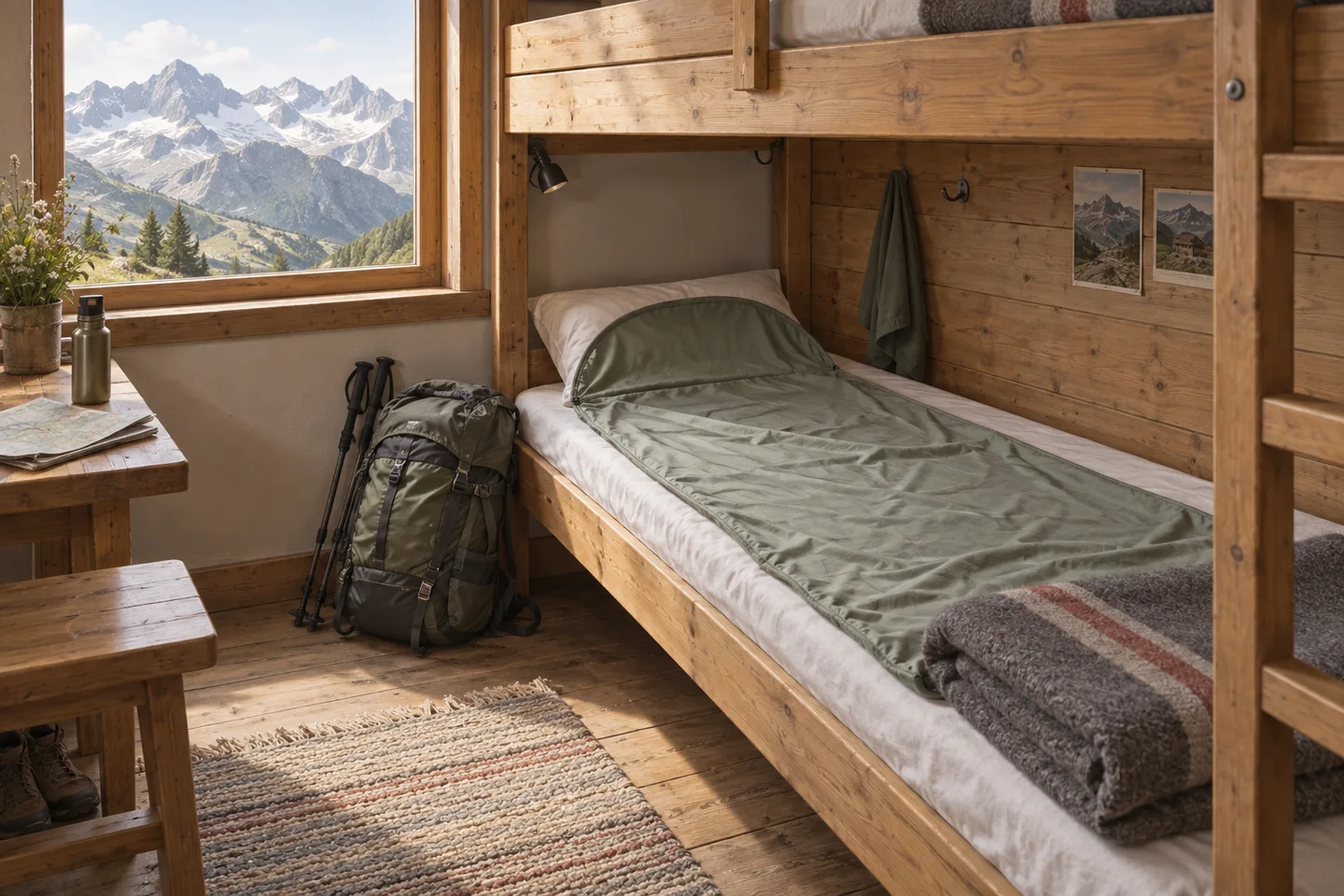
Confirm what the hut supplies
Ask which items are provided: mattress, pillow, pillowcase, sheets, blanket or duvet. Avoid treating “bedding included” as a complete specification. Then confirm whether you need a personal liner and whether a particular type is required.
Useful questions include whether a separate pillowcase is needed, whether personal sleeping bags are allowed and whether a liner can be rented. Rental availability should be confirmed before you rely on it to reduce your packing list.
Save the answers with your reservation details so you can refer to them when preparing equipment.
Check the liner against the actual requirement
Terms such as hut liner, sleeping bag liner and travel sheet can be used differently by different suppliers. Compare the required coverage and construction rather than selecting solely by the product name.
If a property asks for an enclosed liner, a loose flat sheet may not meet its instructions. If it asks for a pillow covering, do not assume your liner includes one. Read the product description and ask about features that are not shown clearly.

Plan for shared sleeping space
Check what is known about the bunk or mattress arrangement. Practice entering the liner on a similar surface without spreading equipment widely around you. Keep night essentials together so you do not need to unpack the entire backpack after lights-out.
A storage pouch can help keep the liner organized during the day. Allow it to air when appropriate and permitted, then pack it away from wet clothing or muddy equipment. Personal bedding is one part of the sleeping arrangement; it does not replace the property's normal cleaning or bedding standards.
Think through wet-weather arrivals
On a walking route, the liner needs to arrive usable even if other gear is wet. Choose a packing method that suits the conditions and verify any water-protection claims for the storage you use.
Ask about laundry and drying facilities before planning to wash the liner between huts. A short overnight stop may not give you enough time to dry it. Do not assume a drying room is available or that it accepts washed bedding.
Recheck before departure
Review each booking's latest instructions, especially if you reserved months ahead. If an email conflicts with a general packing article, resolve the difference with the property directly. Online advice cannot establish the rules for your specific reservation.
Our guide to liners in hostels and guesthouses covers related indoor uses. For a BreenHill liner, compare the listed product information with your hut's requirements and request any missing construction details before buying.