A sleeping bag liner can provide a familiar fabric layer on an overnight train, provided it suits your berth and the bedding arrangement. Its usefulness depends on your reservation: a private sleeper, shared compartment and reclining seat present different needs.
Check what is included with the ticket before adding a liner to your packing list. Bringing personal bedding does not turn a seat booking into a sleeper berth.
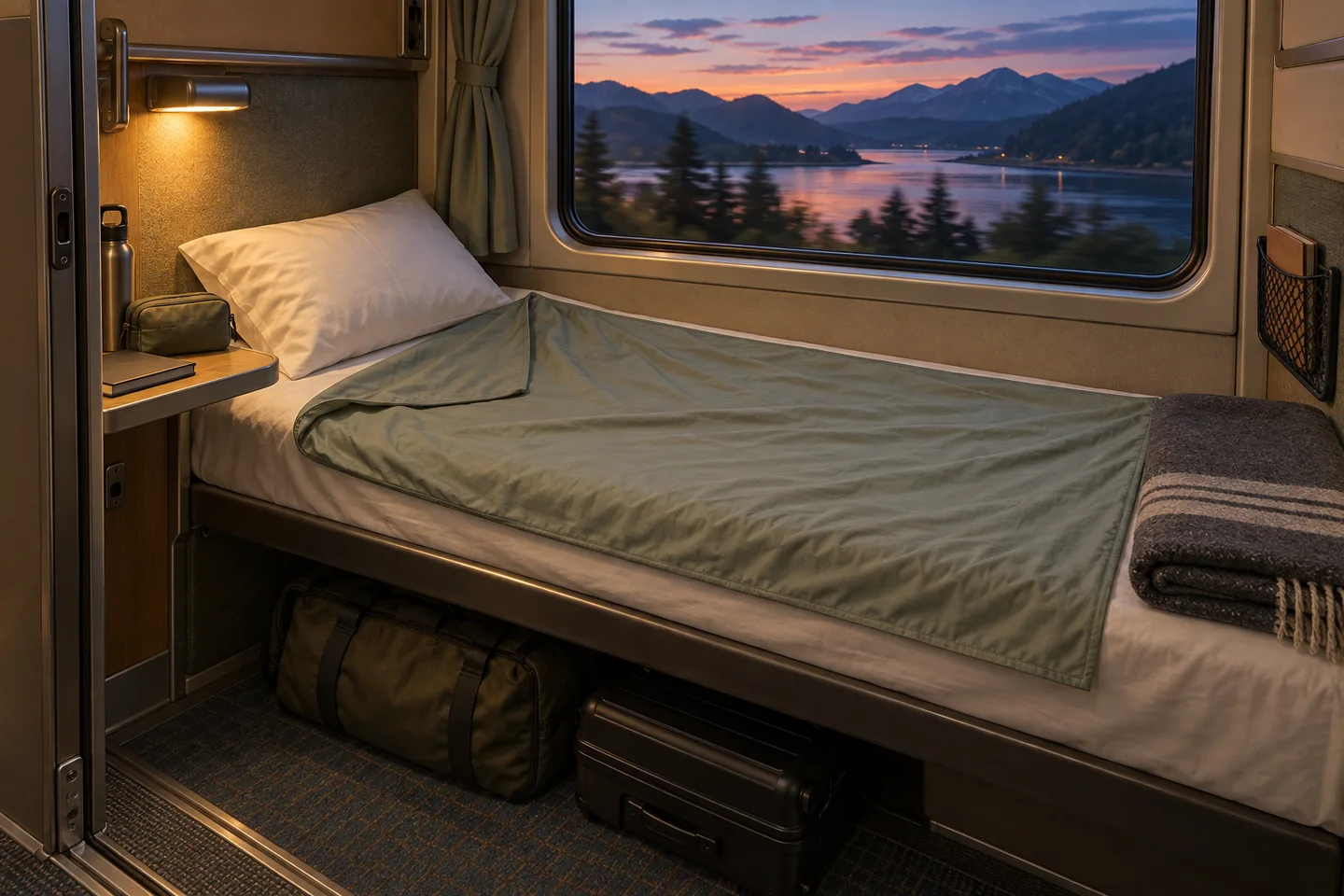
Start with your booked accommodation
Review the operator's current information for the exact service and accommodation class. Confirm whether sheets, a blanket and a pillow are included, and whether there are restrictions on personal bedding.
If the information is unclear, ask the operator rather than relying on a packing list written for another train. Also check boarding and arrival times. A short journey may offer less uninterrupted sleeping time than the timetable first suggests.
Pack for access after boarding
Put the liner with your night essentials in a place you can reach without opening your entire suitcase. Consider where the main luggage will be stored once the berth is prepared.
Keep the clean liner away from shoes and items you will place on the compartment floor. Set aside a simple place for the empty pouch so you can find it in the morning. These small decisions matter more in a shared compartment where space is limited.
Practice the entry movement
Try entering the liner while sitting on the edge of a narrow bed at home. Check whether you can bring your feet inside and lie down without needing to stand or spread the fabric across a large area.
If your booked berth has limited headroom, an opening that felt easy to use in a bedroom may be awkward there. Review the liner's entry design and test your movement before the journey. Avoid fastening personal fabric to train fittings or blocking steps, ladders or access routes.

Keep bedding expectations realistic
A liner can give you a personal contact layer, but it does not establish that a berth is clean or make unsuitable bedding acceptable. Report bedding problems to train staff and request assistance when needed.
Likewise, do not assume the liner replaces a blanket. Air conditioning and your personal preference can change how much bedding feels comfortable. Use the supplied bedding as appropriate and keep practical sleep clothing accessible.
Allow time to pack in the morning
When preparing to leave, check the foot section and folds for small belongings. Pack the liner separately if it is damp and open it for drying at your next suitable stop. Avoid leaving this task until the final moment before arrival, particularly when luggage must be retrieved from elsewhere.
Does it earn a place on your trip?
A liner may be more useful when the train is one of several overnight settings on the same journey. Our guide to uses beyond camping discusses that broader context.
Compare your required fit and entry method with the BreenHill product information. Choose for your booked sleeping space rather than assuming every travel liner will work equally well on every overnight train.