A sleeping bag liner and dedicated sleep clothes can both change what touches the inside of your sleeping bag, but they work differently. Clothes move with your body and can be worn outside the bedding. A liner surrounds you as a separate fabric layer and may also be used on an indoor bed.
Whether you need one, both or neither depends on the job you want them to do. Compare coverage, movement, laundry and your planned accommodation before deciding.
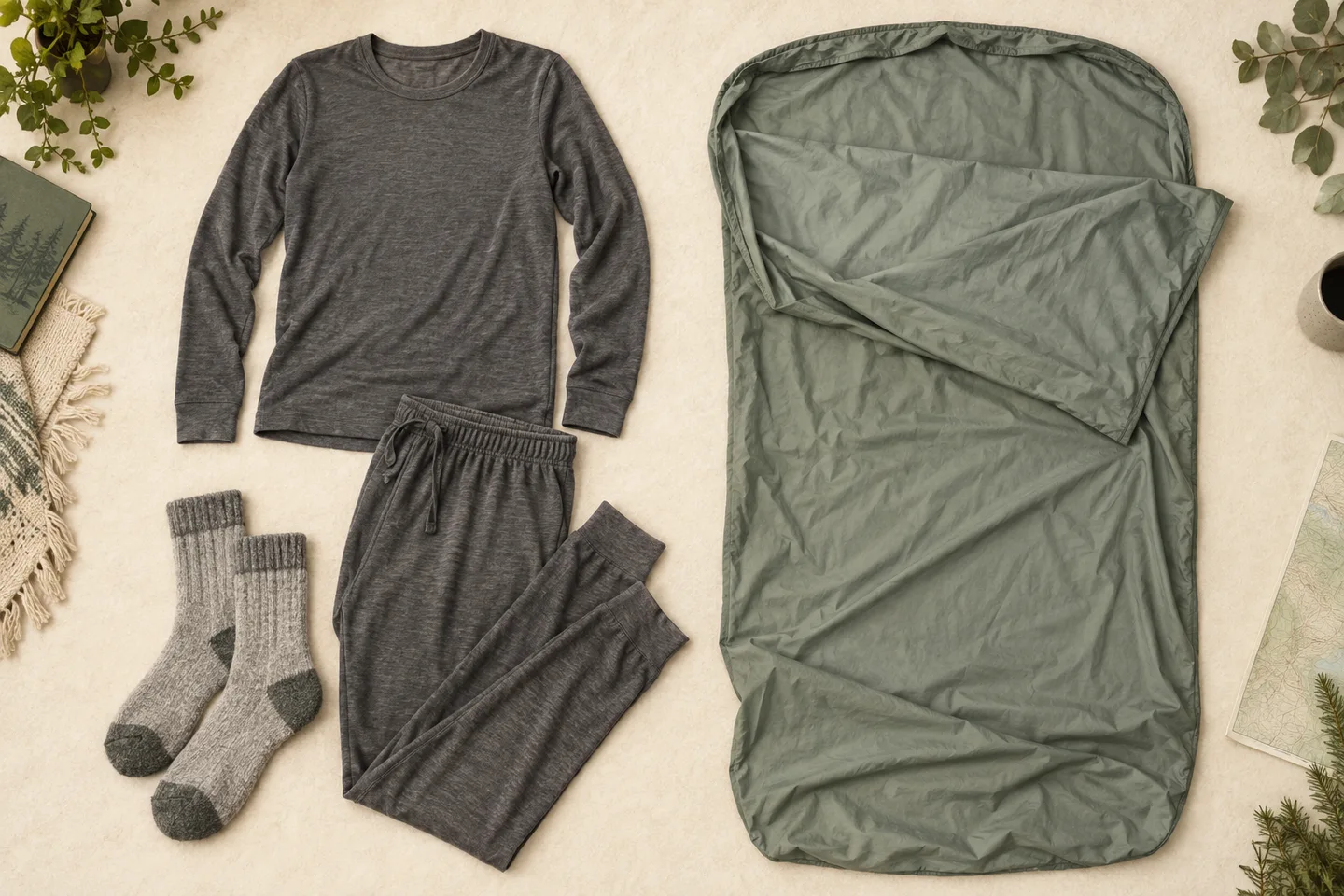
Compare coverage rather than product labels
A long-sleeved top, trousers and socks cover different areas from a short sleep outfit. A liner's coverage also varies with its opening, length and construction. Neither should automatically be described as a complete barrier between your body and the bedding.
Think about which parts of your sleep setup you want to keep away from direct contact. If your feet or lower legs regularly touch the bag lining, compare the actual coverage of your proposed clothing and liner rather than relying on a general cleanliness claim.
Test movement and comfort separately
Some sleepers prefer fitted clothing because it follows their movements. Others prefer the feeling of a loose fabric layer around their legs. These preferences cannot be settled by calling one option more comfortable for everyone.
Try your sleep clothing inside the sleeping bag, then try the same setup with the liner added. Turn over, bend your knees and sit up. Notice whether either arrangement creates pressure, gathers fabric or makes entry more difficult.
If you prefer the liner only with particular clothing, include that combination in your packing plan. Do not test with a light outfit and assume bulky layers will feel the same.
Consider laundry logistics
With dedicated sleep clothes, you may need to wash several pieces. With a liner, you have one larger item, plus a pouch if that also needs cleaning. Which is easier depends on the care instructions and the facilities available during your trip.
Check whether each item can be washed with your other clothing and how you will dry it. A spare set of clothes may be useful when the first set is wet; a liner may give you a separate washable layer. Both choices add equipment that has to be carried and managed.

Look at use outside the sleeping bag
Clothes have an obvious advantage when you need to leave your bedding. A liner may offer a useful personal layer on a bed or in accommodation that specifically requests one. Sleep clothing should not be assumed to satisfy a property's liner requirement.
For a route combining camping and indoor stays, list the requirements at each stop. This often makes the decision clearer than comparing the two items in isolation.
Build the combination around a specific need
Choose sleep clothes when their wearability and familiar fit address your needs. Consider a liner when a separate bedding layer is useful or required. Carry both when each has a clear purpose, and account for their combined weight and drying needs.
For more context, see how a liner helps keep a sleeping bag cleaner. Compare the BreenHill product details with the clothes and sleep equipment you already own before adding another item.