Drying a sleeping bag liner on a trip is partly a laundry question and partly a scheduling question. Even a small piece of fabric needs suitable conditions and enough time. A “quick-drying” description does not tell you whether a liner will be ready after one night in a humid room.
Check the care label first, then work backward from the next time you need to use or pack the liner.
Choose the right laundry window
Before washing, confirm where the liner can dry and how long you will stay. A stop with two nights in one place may offer more flexibility than a late arrival followed by an early train.
Check accommodation rules about laundry, drying racks and hanging items. A suitable shared drying area may be more useful than the private bathroom you initially planned to use. If no workable drying option is available, schedule the wash for a later stop and use clean bedding in the meantime.
Spread the fabric out
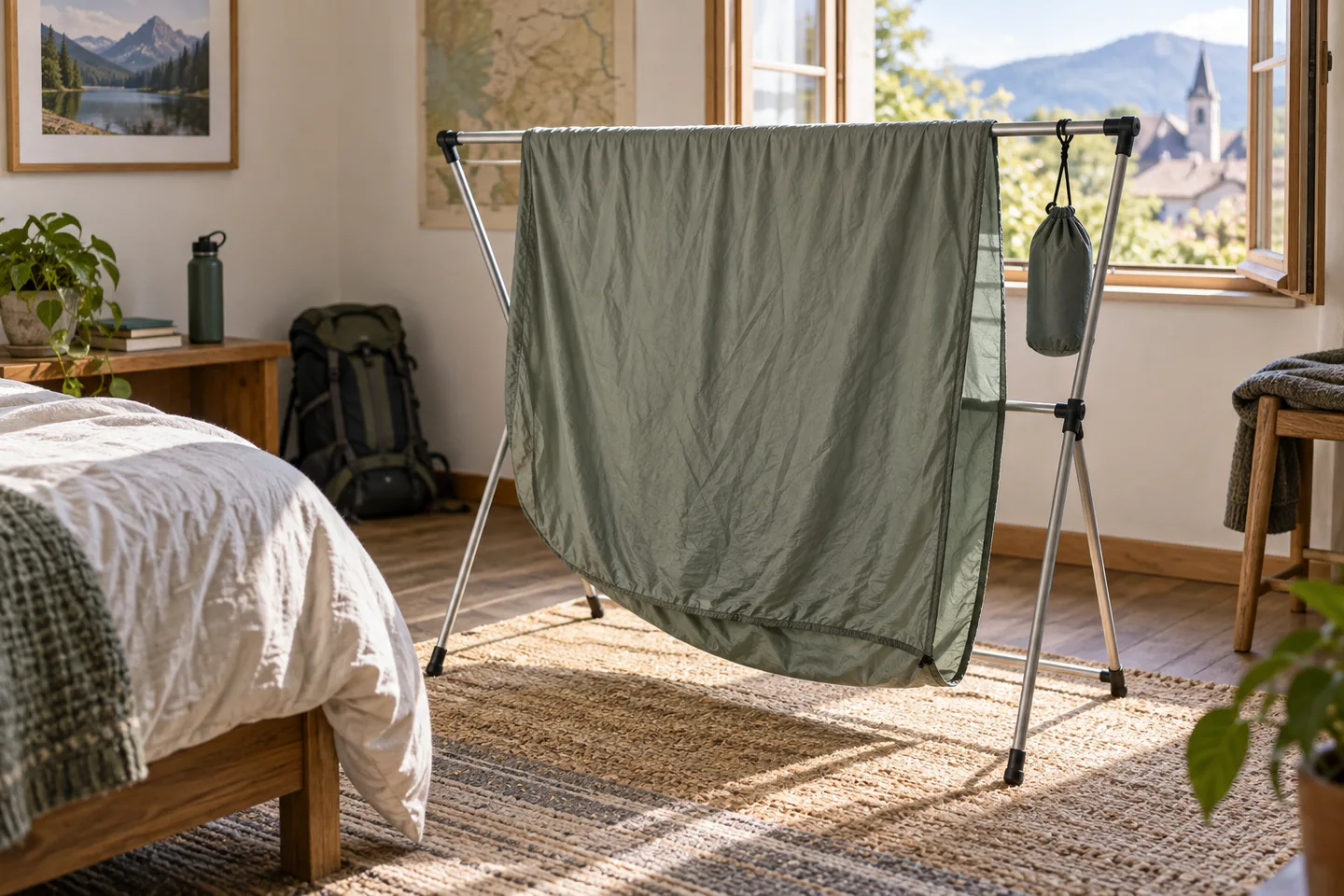
For a liner that permits air drying, open it fully and avoid leaving it in a thick folded bundle. Use a clean support and position the fabric so air can reach as much of it as possible. Rearrange overlapping sections when needed.
Drying conditions depend on room humidity, airflow, fabric construction and how much water remains after washing. The word “polyester” or “cotton” alone cannot give you a reliable drying time for a finished product.
Keep the liner away from heaters, cooking equipment and other improvised heat sources. Use a tumble dryer only when the care label allows it, with the specified setting.
Check more than the middle panel
Before returning the liner to its pouch, inspect the places that can be overlooked: seams, corners, the foot section and any doubled fabric near an opening or pocket. Open folds and check both sides.
If the pouch was washed, inspect it separately. Putting a dry liner into a damp pouch defeats the purpose of checking the liner carefully. For longer storage after the trip, pack everything only when fully dry.

If checkout arrives before the liner is dry
Keep the damp liner separate from dry clothes and electronics during transport. Treat this as a temporary arrangement, with a clear plan to unpack and finish drying at your next suitable stop.
Do not return it to the bottom of your bag and forget about it for the rest of the trip. If it develops a persistent unpleasant smell or visible contamination, assess whether it needs another wash under its care instructions before use.
Make the routine easier next time
Run a practice wash at home before a longer journey. Note whether the liner can be hung conveniently and which sections take the longest to dry. Your home drying time is not a promise for travel, but the test helps you understand the handling involved.
Our cotton and synthetic liner comparison introduces material choices. When comparing BreenHill product information or another listing, ask for exact care guidance instead of relying on an undefined quick-dry claim.