A sleeping bag liner is worth carrying when the job it does matters enough to justify its weight and packed volume on your particular trip. That answer can change between a short campsite visit, a long route with laundry stops and a journey combining trails with indoor accommodation.
Instead of deciding from the word “lightweight,” compare the complete item you will carry with the specific problem you want it to solve.
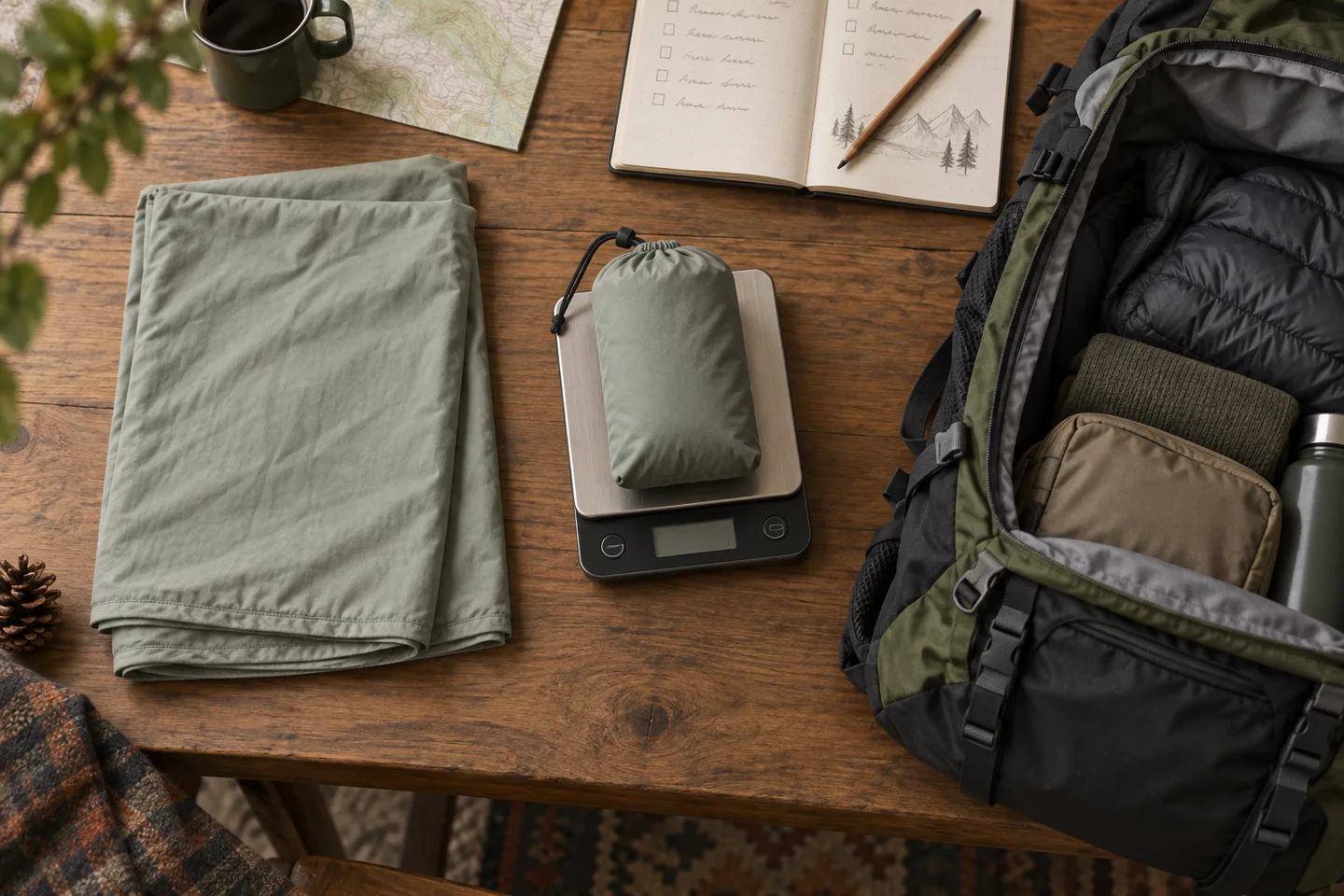
Name the job before weighing the gear
Write down why you want a liner. It might provide a preferred fabric against your skin, serve as a washable contact layer or meet an accommodation requirement. Those are different uses, and not every trip includes all of them.
Then ask whether the liner will be used most nights or sit in your bag for a hypothetical situation. An item used throughout a trip may justify space more easily than one packed without a clear purpose. That is a personal tradeoff, not a reason every backpacker must make the same choice.
Compare complete packed weights
Weigh the liner together with its pouch and any separate protective storage you intend to carry. When comparing listings, check whether published weights include those items and whether they describe the same size variant.
Avoid comparing one product's bare fabric weight with another product's packed weight. If the listing is unclear, ask the seller and record the answer alongside the dimensions.
Small differences can be considered as part of the whole packing list. Keep the calculation concrete: what additional weight is being carried, for how many days, to do what job?
Check volume in your actual backpack
Packed weight and packed volume are different measurements. A liner may fit comfortably into a duffel but occupy a pocket you need for something else in a smaller pack.
Pack your normal overnight equipment first, then add the liner. Check whether it remains accessible when you arrive late or in wet weather. If you plan to use a pouch as weather protection, verify that function; a supplied storage pouch should not automatically be assumed waterproof.

Compare realistic alternatives
Clean sleep clothing, supplied indoor bedding or a different liner may address part of the same need. Compare them against your original purpose rather than assuming that one option replaces every function of another.
A shirt and trousers do not provide the same coverage as an enclosed liner. A liner does not provide the same warmth or versatility as every clothing system. Where both are needed, include both in the weight calculation.
Make a trip-specific decision
Try one nearby overnight using your planned setup before a longer walk. Note whether you actually use the liner, whether it improves your comfort and whether packing it becomes inconvenient. Keep those observations separate from assumptions made while shopping.
Our liner versus travel sheet article introduces another comparison, though product names can overlap. Review the BreenHill listing for current details and request measured packed dimensions if backpack space is a deciding factor.